UK Foreign, Commonwealth & Development Office · UK Trade and Development: Evidence and Innovation Programme · 2025–2026
Assessing where trade incentives intersect with environmental pressures, and how this can inform more coherent trade, development and investment policy.
The challenge
The UK’s Developing Countries Trading Scheme (DCTS) provides preferential market access to developing countries, influencing trade flows, production and livelihoods.
At the same time, these production systems depend on natural resources and environmental conditions, including climate, water, land and ecosystems. Environmental pressures can therefore affect not only environmental outcomes, but also health, incomes, economic resilience and long-term development.
The challenge was to identify where DCTS-supported trade and environmental pressures intersect, and where these interactions create risks or opportunities that merit further policy attention.
My contribution
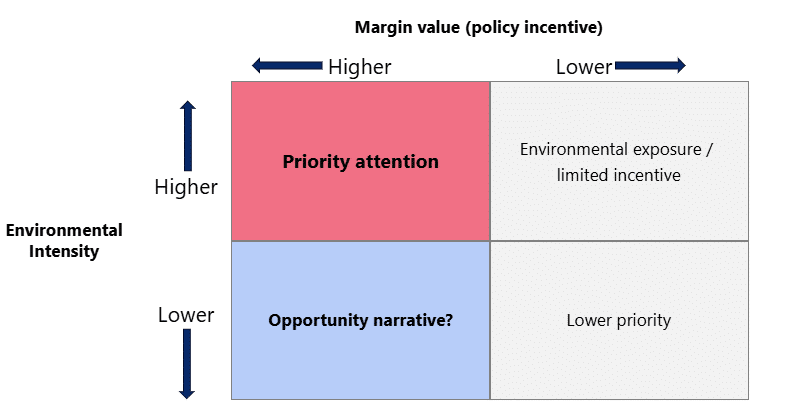
As Project Lead and technical expert, I developed a screening and diagnostic framework combining DCTS tariff preferences and utilisation rates with UK trade data and indicators covering climate change, air pollution, water scarcity and biodiversity.
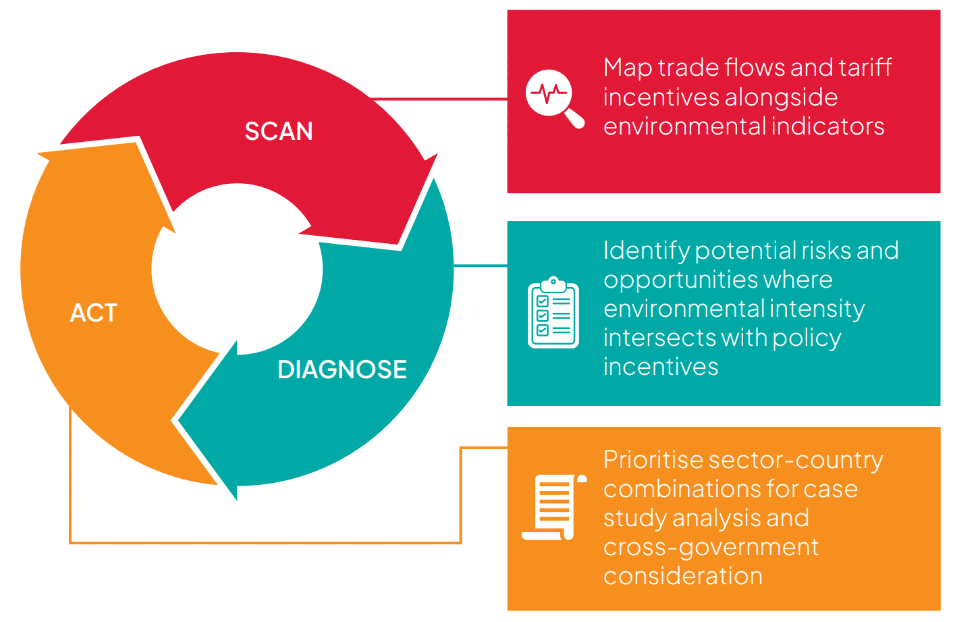
The analysis looked beyond environmental intensity alone, considering the scale of trade and pressures occurring further upstream in supply chains. This produced a practical Scan–Diagnose–Act approach for identifying where deeper analysis, country engagement, technical assistance or investment could have the greatest value.
The approach was designed as a prioritisation tool rather than a conventional environmental impact assessment or compliance exercise.
Findings and impact
What the analysis shows
The screening identified approximately $15.5 billion of UK imports receiving, or potentially receiving, DCTS preferences across 214 sector-country combinations and 40 partner countries. This represents 39% of imports from DCTS partners over 2022–24.
The analysis found that these trade flows are particularly concentrated in textiles and clothing, carbon-intensive products and agri-food, with different patterns of environmental exposure: from highly intensive production to large-scale trade and pressures embedded further upstream in supply chains.
Bangladesh’s garment sector illustrates one of these patterns. While production is relatively efficient against global benchmarks for several environmental indicators, the scale of trade creates significant aggregate pressures, particularly in upstream supply chains. This illustrates why both the intensity and scale of environmental pressures matter when assessing trade-related risks and opportunities.
Impact
The analysis provides a basis for moving beyond environmental performance as a condition on trade towards considering it as part of long-term export competitiveness, market access and supply-chain resilience.
The screening framework provides a practical tool for identifying where further analysis, country engagement, technical assistance or investment could have the greatest value. It can also support more coherent use of trade preferences alongside development finance, Aid for Trade, investment and emerging environmental regulations
Project context
The work was funded by UK International Development through the Trade and Development Evidence and Innovation Programme. The programme was led by Cadmus, and delivered in partnership with ODI Global, the Institute of Development Studies and the UK Trade Policy Observatory.
Related services
Trade, sustainability and economic transformation
Economic and policy analysis
If you are looking for independent economic analysis, research expertise or specialist support within a wider project team, get in touch to discuss how I could contribute.